Decentralized Hybrid Rigs: The Rise of the Village Drill Across 35 Countries
Published: May 29, 2026 • Sector: Drilling Technology • Author: SafeWater.wiki Tech Desk
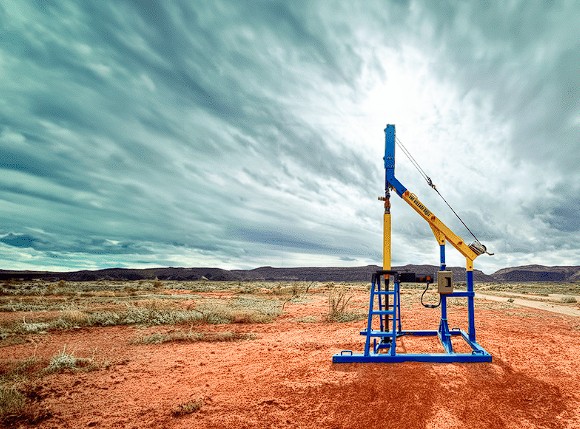
SALT LAKE CITY / DODOMA — The human-mechanical hybrid Village Drill, originally developed by engineering teams at Brigham Young University and scaled globally by WHOlives, has now reached deployment milestones across 35 countries in Africa, Asia, and the Americas.
Traditional commercial drilling rigs weigh between 15 and 25 tons and require wide, graded access roads. Mobilizing these heavy trucks to remote off-grid villages often costs upwards of $5,000 before drilling even begins, driving total borehole costs beyond $15,000 USD.
In contrast, the Village Drill breaks down into lightweight, modular aluminum and steel components that can be transported in the back of a light pickup or carried over footpaths by 4 people.
Engineering & Economic Highlights
- Depth Capability: Drills to depths of up to 80 meters (260 ft) through rocky and semi-consolidated formations.
- Hybrid Power: Powered either by 4 manual operators turning a high-torque wheel or a compact 10–13 HP gasoline engine.
- Average Borehole Cost: $3,000 to $4,500 USD total per complete installation, cutting capital costs by more than 65%.